
Roofing projects depend on sequencing. First, crews prepare the site. Next, they remove old materials. Then, they inspect decking, install underlayment, add flashing, place the primary roof material, finish ridge and ventilation details, and finally clean the property. If materials are difficult to find during any of those steps, the entire flow slows down.
For that reason, on-site storage containers for roofing should be viewed as more than extra space. They are part of the project management system. A clean, organized container can function like a temporary supply room. With labeled sections, shelving, bins, or pallet spacing, crews can separate materials by phase, roof section, or trade.
For example, one side of the unit might hold tear-off and cleanup supplies, while the other side stores installation materials. Meanwhile, smaller items such as fasteners, sealants, blades, and vents can be grouped in bins near the entrance. This simple layout helps prevent wasted time and reduces confusion, especially when different crew members rotate through the job.
In addition, storage containers support a safer site. Loose tools, open boxes, scattered underlayment, and misplaced hoses can create hazards. However, when unused items are stored away, walkways and staging areas stay clearer. This does not replace a full safety plan, but it does support cleaner habits and better jobsite discipline.
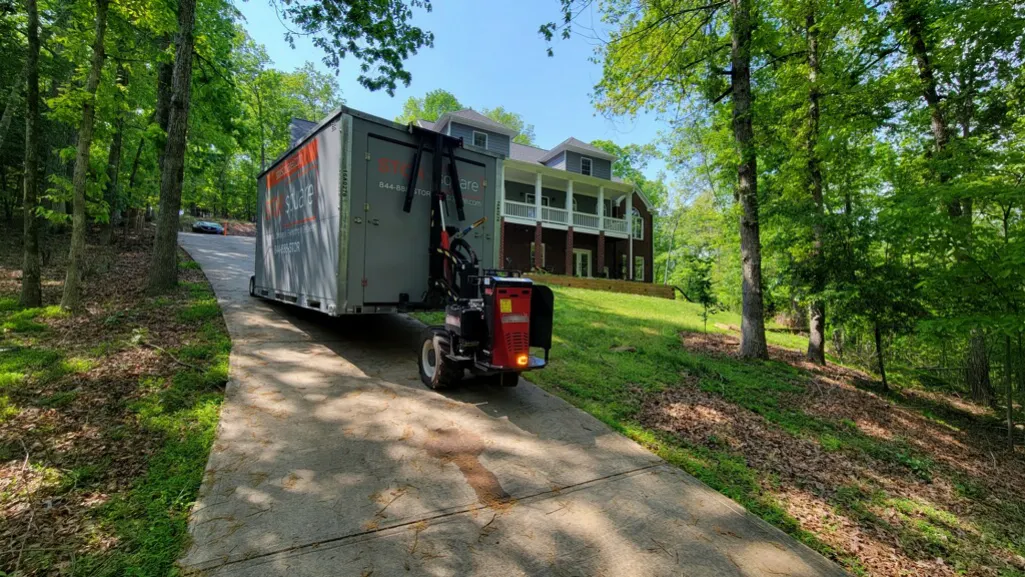
Choosing the Right Container Size for Roofing Work
The best container size depends on the project scope, available space, delivery access, and how long the job will last. A small repair may only need room for tools, tarps, and a few material bundles. On the other hand, a full roof replacement may require space for multiple pallets, accessories, and equipment.
STORsquare, for example, offers several weather-proof portable storage unit sizes, including 8′, 12′, 16′, and 20′ options. That range gives customers flexibility when matching the container to the project instead of forcing every job into one standard size.
A smaller container may work well for roof repairs, local move staging, minor exterior work, or a compact remodeling project. However, a larger unit may be better for full replacements, multi-building properties, or contractors who want to keep equipment and materials together throughout the job. Therefore, the goal is not simply to choose the biggest container. Instead, it is to choose the size that keeps the site efficient without taking up unnecessary space.
When planning, consider the amount of material being delivered, the size of the driveway or parking area, how close the container can be placed to the work zone, and whether the property will still need room for vehicles, dumpsters, or equipment. Also, think about access. If the crew needs to enter the container several times a day, the doors should open easily without blocking other parts of the site.
On-Site Storage for Residential Roofing Projects
For homeowners, a roofing project can feel overwhelming before the first shingle comes off. Materials may be delivered early, crews may need access to different parts of the property, and the normal rhythm of the home can be disrupted. However, on-site storage can make the process feel more controlled.
A portable container can keep roofing supplies out of the garage, away from landscaping, and separate from everyday household items. As a result, homeowners do not need to give up as much personal space while the project is underway. This is especially helpful when the roofing work happens alongside a local move, interior remodeling, exterior painting, gutter replacement, or storm repair.
In many cases, homeowners also use portable storage during larger home projects because it solves several problems at once. Furniture, patio items, tools, seasonal décor, and project materials can be kept out of the active work area while contractors work, as long as they are packed properly and suited for temporary container storage. Therefore, a provider that offers both moving container and storage options can be useful when the roofing project is part of a broader transition.
Although roofing contractors often coordinate material handling, homeowners still benefit from asking how supplies will be stored before work begins. A clear storage plan helps avoid blocked garages, damaged lawns, cluttered walkways, and last-minute decisions.
Need On-Site Storage for a Roofing Project?
Keep shingles, tools, and equipment organized with a portable storage container delivered directly to your jobsite.

On-Site Storage for Commercial Roofing Projects
Commercial roofing projects can be even more complex. Materials may need to be delivered in stages, work may need to happen around business hours, and crews may have to coordinate with tenants, property managers, maintenance teams, or other contractors. Because of this, mobile storage can play an important role in keeping the project organized.
For example, a retail center may need roofing supplies stored in a designated area that does not interfere with customer parking. A school or church may need equipment secured between workdays. An apartment community may need materials staged near one building at a time. In each case, a portable container gives the roofing team a defined storage point while helping the property remain functional.
Commercial sites also tend to involve more equipment. Safety gear, insulation, membrane rolls, adhesives, mechanical fasteners, carts, and power tools all need space. Therefore, storage rental containers can reduce clutter in maintenance rooms, hallways, loading zones, and service areas.
Additionally, commercial clients usually care about professionalism. A clean storage plan signals that the contractor is organized, prepared, and careful with the property. While that may seem like a small detail, it can influence how smoothly the project is perceived by tenants, employees, and customers.
Protecting Materials From Weather and Jobsite Disruption
Roofing materials are designed to perform on a roof, but that does not mean they should be stored carelessly before installation. Rain, mud, wind, excessive handling, and site traffic can all create issues. Consequently, on-site storage containers for roofing help reduce avoidable wear before materials are used.
Shingles, for instance, should be kept organized and accessible. Underlayment rolls should not be left where they can collect water or debris. Sealants and small accessories should not be scattered where they can be lost or damaged. Likewise, tools and compressors should be secured after hours.
Compared with uncovered outdoor staging, a weather-proof portable unit gives crews a better place to keep materials organized and shielded from changing jobsite conditions. It also gives the crew a place to protect supplies quickly when weather changes. While no container replaces proper material-specific storage instructions, it does create a stronger baseline than leaving everything exposed.
Moreover, containers help during cleanup. Roofing jobs generate packaging, cutoffs, nails, old materials, and general debris. Although waste should go into the proper dumpster or disposal system, extra tarps, magnets, brooms, and cleanup equipment can stay organized in the container until the final walkthrough.
How Storage Containers Improve Customer Experience
Roofing is not just a construction project. It is also a customer service experience. Homeowners and property managers often judge the project by communication, cleanliness, access, and how well the contractor respects the property. Therefore, a storage container can support a better customer impression.
When materials are neatly contained, the jobsite looks more professional. When tools are not left across the property overnight, customers feel more comfortable. When supplies are easy to find, crews can work more efficiently and answer questions with confidence. As a result, the project feels less chaotic.
This matters because roofing can already be noisy, messy, and stressful. Anything that reduces disruption helps. In addition, customers may be more likely to recommend a contractor who keeps the job organized from start to finish.
For contractors, that can become a competitive advantage. Many companies focus on price, materials, warranties, and scheduling. Those details are important. However, the jobsite experience also matters. A simple storage plan can help show that the contractor takes the whole project seriously.
Portable Storage vs. Off-Site Self Storage
Traditional self storage has its place. However, roofing projects usually need convenience more than distance. If materials are stored off-site, crews may lose time driving back and forth. Additionally, they may need extra labor to load and unload supplies multiple times.
Portable self storage works differently. The unit comes to the property, stays as long as needed, and keeps materials close to the work. For active construction, renovation, and roofing jobs, self storage containers for rent can be a practical alternative to a fixed storage unit across town because materials stay closer to the crew, the property, and the work schedule.
Of course, there are situations where off-site storage is helpful. For example, if a homeowner needs to clear out a garage before roofing and remodeling begin, the container may be stored at a secure facility after loading. However, during the active roofing phase, direct site access is usually the priority.
This flexible model is also helpful for contractors who operate across several service areas. Instead of relying only on warehouses or trucks, they can place storage rental containers where work is happening. Consequently, each jobsite becomes more self-contained and easier to manage.
Planning Container Placement Before Delivery
Container placement should be planned before delivery day. Although this step is simple, it can prevent many headaches. The container should be close enough to the work area to be useful, but not so close that it blocks dumpsters, ladders, customer access, or emergency pathways.
A driveway is often the most convenient location for residential roofing. However, contractors should confirm that the surface is suitable and that doors can open fully. For commercial sites, a parking area, loading zone, or designated service space may work better. In either case, clear communication with the property owner is essential.
Before the container arrives, review how it will fit into the daily flow of the jobsite. The delivery vehicle needs enough room to maneuver safely, and the container doors should open fully without blocking driveways, dumpsters, ladders, or customer access. Placement should also support the roofing sequence. If crews need to access shingles, underlayment, tools, or cleanup supplies throughout the day, the container should be close enough to reduce wasted steps but far enough away to avoid crowding the active work area.
Property protection matters as well. A good placement plan considers landscaping, pavement, drainage, and pedestrian access before the unit is delivered. For added security, choose a visible, well-lit area when possible, especially if tools or materials will remain on-site overnight.
When Should You Schedule a Roofing Storage Container?
The best time to schedule on-site storage containers for roofing is before major materials arrive. Ideally, the container should be delivered early enough for crews or suppliers to load it in an organized way. That way, the site does not start cluttered and then require cleanup later.
For a residential roof replacement, scheduling the container a few days before material delivery may be enough. For larger commercial projects, it may be useful to coordinate storage even earlier, especially if deliveries will arrive in stages. In storm season, contractors may also want faster access to mobile storage units so they can handle increased demand after severe weather.
If the project schedule changes, monthly rental flexibility can help. STORsquare notes that customers can keep a storage unit at home or have it transported to one of its secure locations, depending on the situation. This type of flexibility can be useful when inspections, weather delays, insurance approvals, or related repairs affect the roofing timeline.
Why Contractors and Homeowners Look for Local Storage Support
Roofing projects are local by nature. Crews need containers delivered to real properties, on real streets, with real timing concerns. Therefore, local support matters. A provider that understands the service area can often help customers choose the right size, decide where the container should go, and coordinate delivery more smoothly.
STORsquare serves customers with portable storage and moving containers in several Southeastern markets, including locations in Georgia, Florida, Tennessee, and North Carolina. For roofers, remodelers, and homeowners in those areas, that makes it easier to find a nearby option for storage container rentals, moving container needs, and project-based storage.
Just as importantly, the process should be straightforward. A customer should be able to request a quote, choose the right unit size, schedule delivery, load at their pace, and keep the container on-site for the project window. STORsquare’s quote page is set up around moving, storage, or both, which makes it relevant for roofing jobs that overlap with renovations, moves, or property updates.

Making the Most of Your Roofing Storage Container
Once the container is delivered, a little planning goes a long way. Do not simply stack materials wherever they fit. Instead, think through how the crew will use the unit throughout the job. Place the most frequently used items near the entrance. Keep heavy materials stable and accessible. Separate tools from roofing products when possible. Label bins or boxes for small parts.
In addition, keep pathways inside the container clear enough for safe movement. Roofing supplies can be heavy and awkward, so crews should not have to climb over materials to reach what they need. If the job will last more than a few days, consider doing a quick end-of-day reset so the next morning starts smoothly.
For contractors, this can become part of the standard operating process. Every job gets a storage layout. Every crew knows where tools go. Every supervisor can check the container before leaving. Over time, this consistency can reduce lost tools, missing supplies, and unnecessary purchases.
The Bottom Line: Better Storage Supports Better Roofing
Roofing work depends on timing, materials, labor, and weather. Although no storage solution can control every variable, on-site storage containers for roofing can make the job easier to manage. They keep supplies close, protect tools between workdays, reduce clutter, and help crews maintain a more professional site.
For homeowners, portable storage can make a roof replacement feel less disruptive. For contractors, it can improve efficiency and customer experience. For commercial properties, it can support cleaner staging and better coordination. Therefore, whether the project involves a small repair, a full replacement, a local move, or a larger remodeling plan, the right storage setup can add real value.
Ready to Keep Your Roofing Jobsite Organized?
Get secure on-site storage for roofing materials, tools, and equipment with flexible delivery from STORsquare.
If you are comparing portable storage units look for a provider that offers flexible sizing, simple scheduling, and a clear quote process. STORsquare is a practical option for customers who want portable storage delivered to the property and sized to the project.