
Seasonal Storage for Businesses: How to Store Inventory and Equipment
Seasonal storage for businesses helps keep inventory, equipment, displays, supplies, and other periodically used items out of active work areas when they’re not needed. The right business storage solutions can create temporary capacity while keeping seasonal items organized and accessible for the next busy period.
This guide explains how to decide what should go into storage, prepare items properly, organize a portable storage container for practical access, choose an appropriate container size, and build a repeatable process for rotating seasonal items throughout the year.
Why Businesses Need Seasonal Storage
Seasonal storage becomes useful when the amount of inventory, equipment, or supplies a business needs changes during the year. A retailer may order merchandise ahead of a holiday rush, a contractor may need a place for tools or equipment during an off-season, and an event team may store signage, furniture, or promotional materials between recurring events.
These temporary increases can put pressure on stockrooms, offices, back-of-house areas, or active work space. For example, business inventory storage may be needed when incoming stock arrives before existing inventory has sold through. Restaurants and hospitality businesses may need to put seasonal furniture or décor aside, while offices may need temporary space for event materials, records, or equipment during a renovation or reconfiguration.
The key difference between a seasonal capacity problem and a permanent space problem is that the need rises and falls. A business may need substantial extra storage for a few weeks or months, then return to its normal storage requirements once the peak period ends. Recognizing that pattern helps the business plan for temporary capacity instead of treating every seasonal increase as a reason to permanently expand its storage footprint.What Businesses Can Store in Portable Storage Containers
Portable storage can work for many types of seasonal business property, including inventory, equipment, displays, event materials, furniture, and supplies that do not need to remain in active work areas year-round. Commercial storage containers can be especially useful for items that are used during predictable periods and can be packed and stored between seasons.
Common examples include nonperishable seasonal merchandise, boxed supplies, display fixtures, signage, event booths, promotional materials, office furniture, and appropriate tools or equipment. A retailer might store holiday displays after a promotion ends, while a contractor could set aside equipment that is only needed for certain types of seasonal work. An event team might use storage for booth materials, banners, tables, or other reusable supplies between scheduled events.
Portable storage is not appropriate or permitted for every type of business property, so storage requirements and restrictions should be checked before anything is loaded. STORsquare prohibits certain items, including food and flammable or combustible materials, and businesses should review current restrictions before attempting to store hazardous, regulated, chemical, liquid, or otherwise restricted property. Businesses that generate hazardous waste can also review the EPA’s small-business hazardous waste guide for an overview of federal requirements and guidance on checking applicable state rules. Review what you can store in a container and applicable storage restrictions before deciding what belongs in portable storage.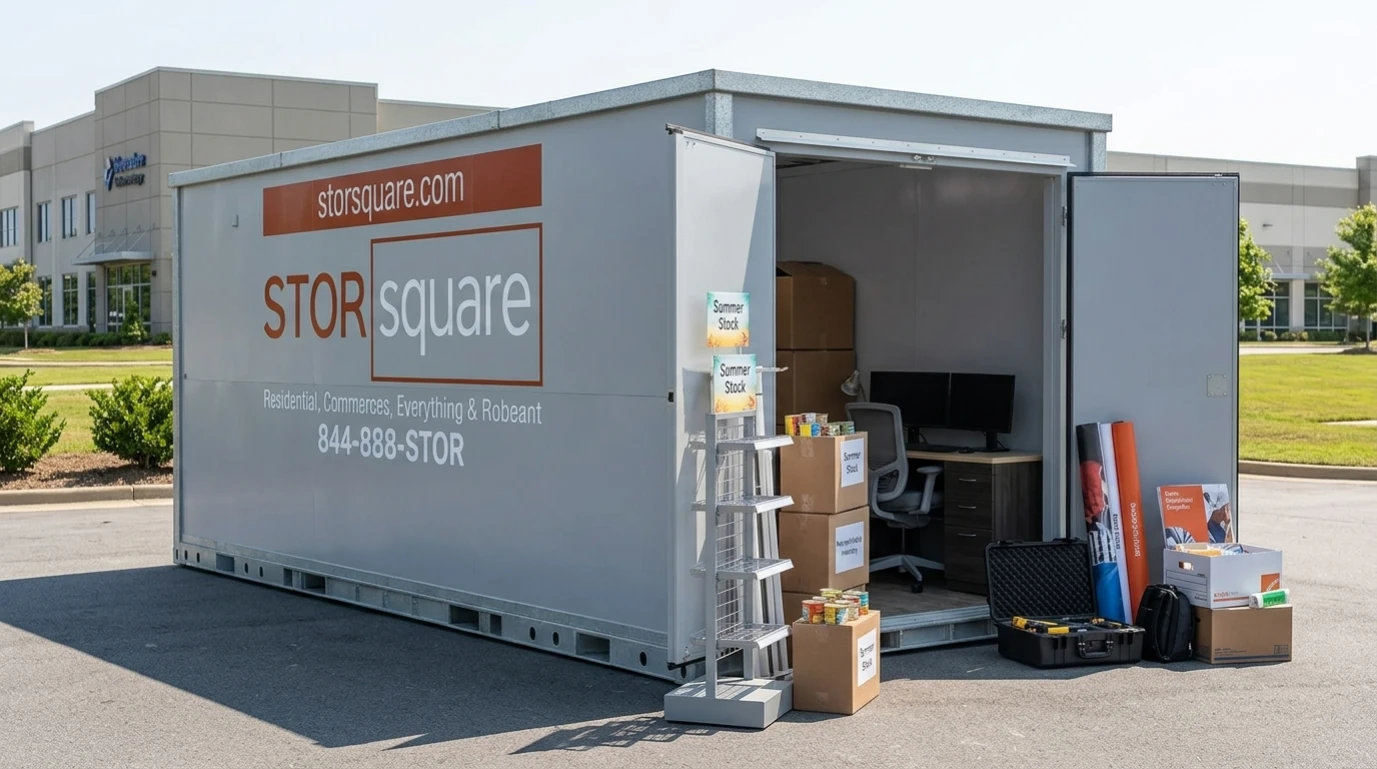
Benefits of Using Portable Storage for Seasonal Business Needs
Portable storage gives businesses a way to add temporary capacity without permanently dedicating stockroom, office, service, or workspace to items that are only needed part of the year. For businesses with changing storage demands, these business storage solutions can expand or contract with the season rather than becoming a permanent part of the property.
One of the main advantages is flexibility. A business can use temporary commercial storage when inventory, displays, equipment, or supplies exceed normal capacity, then reduce that extra storage when the seasonal need ends. This can be particularly useful when merchandise arrives before a peak selling period or when equipment needs to be stored between periods of use.
Access also matters. Keeping a portable container on-site can make sense when employees expect to retrieve inventory, tools, displays, or supplies throughout the season. When those items will remain untouched for longer periods, off-site storage may be more practical if reclaiming space at the business is the greater priority. Businesses considering off-site storage should confirm the applicable access process in advance.
How the container is organized can also make seasonal transitions easier. Keeping related items together and arranging them according to when they will be needed again helps employees identify and retrieve stored property without unnecessarily moving everything else. That is especially useful when the same displays, supplies, or equipment return to use every year. Learn more about STORsquare’s commercial storage solutions for temporary and seasonal business needs.How to Prepare Seasonal Items for Portable Storage
Before loading seasonal items into storage, review what the business actually expects to use again. Remove obsolete, damaged, expired, discontinued, or unnecessary inventory and supplies so container space is reserved for items that still have a clear future use. Once you know what is worth keeping, the next step is to make sure those items are ready to sit in storage without creating avoidable problems later. The exact preparation will depend on what the business is storing, but a few basic steps apply to many types of inventory, equipment, displays, and supplies:- Clean and dry items before storage. Dirt, moisture, grease, or residue can create avoidable problems during storage, especially for equipment, fixtures, tools, and reusable displays.
- Protect surfaces and fragile components. Use appropriate wrapping, covers, or padding for items that could be scratched, dented, or damaged during handling or transport.
- Consolidate smaller materials. Sturdy boxes or bins can keep promotional materials, supplies, hardware, and other small items together and make them easier to identify later.
- Keep related components together. Parts, accessories, cables, fasteners, and assembly hardware should stay with the equipment, display, or fixture they belong to whenever possible.
- Disassemble items when appropriate. Furniture, fixtures, booths, or display systems may take up less space when safely disassembled, but businesses should follow manufacturer guidance and keep all parts clearly grouped.
- Secure equipment properly. Follow manufacturer instructions for any equipment that requires specific preparation before storage, such as draining, disconnecting, stabilizing, or protecting certain components.
How to Organize Seasonal Inventory in a Storage Container
A good business inventory storage system should still make sense weeks or months after the container is loaded. The goal is not simply to fit as much as possible inside. Employees should be able to identify what is stored, understand where it is located, and retrieve the items they need without unnecessarily unloading other inventory.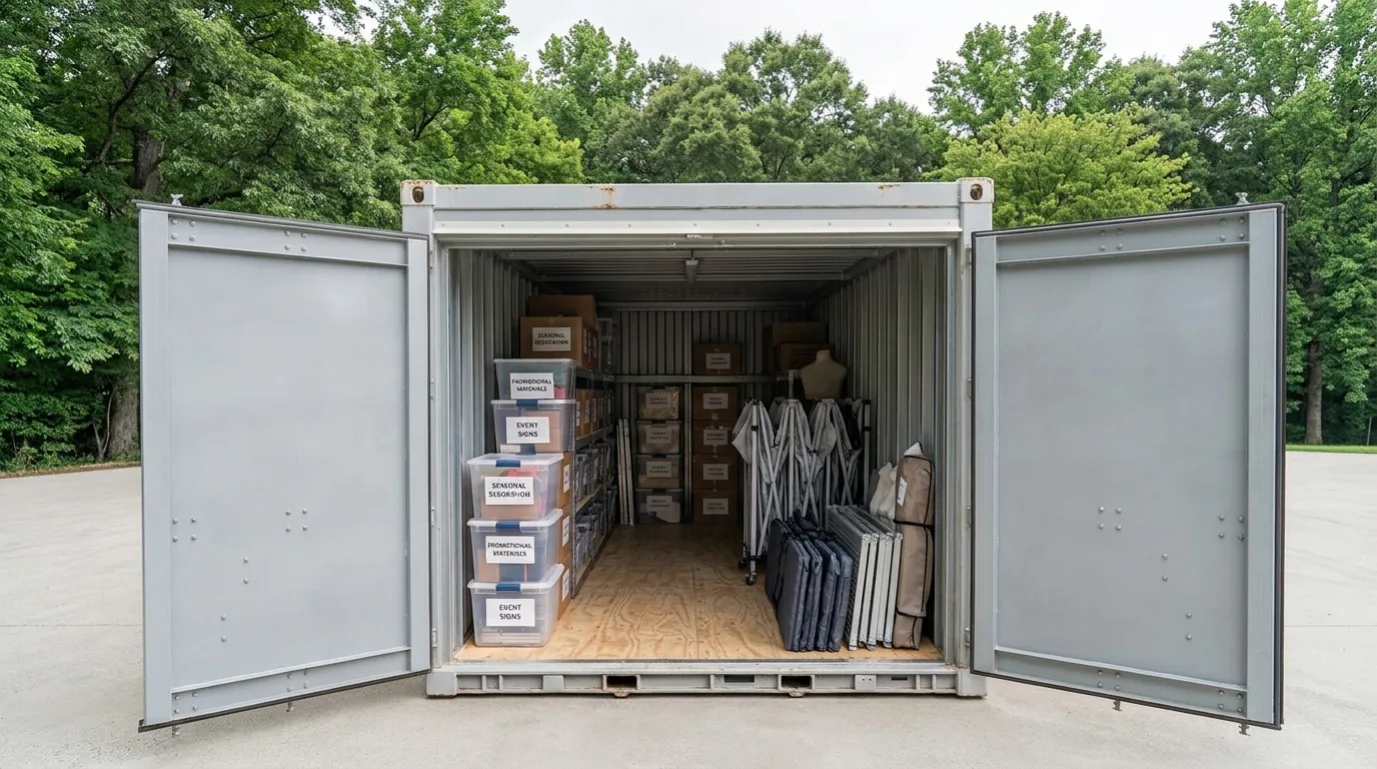
Start by grouping related items by season, use, or category. Holiday displays can stay together, for example, while event materials, promotional supplies, tools, or other business equipment can form their own groups. Clearly label boxes and bins, and position labels so they can be seen from the main access point or aisle whenever possible.
A simple inventory list can make the arrangement much easier to maintain. It does not need to function like a warehouse-management system. Recording the category, quantity, container or storage location, and a brief placement note is often enough to help employees locate items and keep track of what has been removed or returned.
Access should influence where items are placed. Inventory or equipment expected to return to use first belongs closer to the container entrance or along an accessible route. Items that will remain stored for the entire season can usually go farther inside. If employees will regularly retrieve goods while the container remains loaded, leaving a practical pathway is more useful than filling every available gap.
Vertical space can help increase usable capacity, but it should be used with stability and retrieval in mind. Shelving, secure stacking, and appropriately sized containers can make good use of height, while heavier items should have proper support and stacks should remain stable. For additional workplace guidance, see OSHA’s materials-handling and storage requirements for keeping stored materials stable and aisles and passageways clear.How to Choose the Right Portable Storage Container for Your Business
Choosing among commercial storage containers should begin with the property being stored and how the business expects to use the container. Total volume matters, but it is only part of the decision. Item dimensions, access needs, available placement space, and storage duration can all affect how much usable capacity the business actually needs.
Boxed inventory is generally easier to arrange efficiently because boxes and bins can often be grouped or stacked. Bulky fixtures, equipment, furniture, and display systems require a different calculation. A relatively small number of large items can use substantial floor area or make certain parts of a container difficult to reach. Businesses should therefore consider both the quantity of property and the dimensions of individual items when estimating capacity.
Access is another important factor. If employees will retrieve merchandise, tools, or supplies throughout the season, the container needs enough room for an accessible layout rather than being packed completely from front to back. That may also make on-site storage more practical. If the stored property is unlikely to be needed until the season ends, off-site storage may be worth considering, subject to the applicable access process.
For an on-site container, placement should be part of the decision from the beginning. Consider where the container can sit without interfering with entrances, parking, deliveries, customer traffic, or normal business operations, as well as whether the location is suitable for delivery and pickup.
Storage duration matters too. A short period of seasonal overflow may call for a different setup than several months of storage, especially when access needs change over time. Businesses can compare commercial container sizes based on the inventory, equipment, available placement space, and access their storage plan requires.
For businesses with limited stockroom or workspace, portable containers can also serve as small business storage solutions when additional capacity is needed temporarily rather than permanently. The goal is to choose an appropriate amount of usable space, not simply the largest container available.
Not sure which container fits your seasonal storage needs?
Tell STORsquare what your business needs to store, where you want to keep the container, and how long you expect to need it.
Request a Business Storage QuoteSeasonal Storage Tips for Businesses
A repeatable storage process makes seasonal transitions easier because each cycle can build on what the business learned the previous time. Good seasonal inventory planning should be based on actual use rather than automatically storing the same property in the same way every year.
Planning should begin by identifying what will need to leave active business space during the upcoming season and what may still need to be accessible. That gives the business a clearer basis for deciding how much storage is needed, where frequently used items should go, and how long the extra capacity will be required.
As seasons change, review stored property before automatically returning it to the next storage cycle. Some inventory may have become obsolete or discontinued, while damaged or consistently unused items may no longer justify the space they occupy. This review can keep the storage plan aligned with current business needs instead of allowing unnecessary stock to accumulate from one season to the next.
Keep the inventory record current whenever goods are added, retrieved, or returned. This becomes especially useful when more than one employee uses the container, since the list gives everyone a shared reference for what is stored and where it should be located.
If employees will need access during the storage period, preserve a clear route to the items they are most likely to retrieve. Items that will stay stored until the next seasonal transition can be positioned farther inside. The layout should reflect how the container will actually be used rather than simply maximizing the amount that fits.
At the end of each season, take note of what worked. Consider which items were retrieved frequently, what remained untouched, whether the container provided the right amount of usable space, and whether the layout made retrieval practical. Those observations can make the next seasonal storage cycle easier to plan.Make Seasonal Inventory Management Easier With Portable Storage
Effective seasonal storage starts with a few practical decisions: what needs to move out of active business space, how long it will be stored, how often it may need to be accessed, how much capacity is required, and how items should be organized for the next rotation. Portable storage can be one of the more flexible business storage solutions when that need is temporary. By matching the container and storage setup to the items, access plan, and seasonal schedule, businesses can create extra capacity without treating a recurring seasonal need as a permanent space requirement. Explore STORsquare’s commercial storage options or compare container sizes to find an option that fits your seasonal storage plan.Need extra storage for your next busy season?
Request a quote based on your business location, container size, storage plan, and expected timeline.
Get a Seasonal Storage Quote